The Bibliotheca Alexandrina: Reviving Alexandria’s Eternal Flame of Knowledge 8M+ books
The Bibliotheca Alexandrina: Reviving Alexandria’s Eternal Flame of Knowledge 8M+ books
A deep guide to the Bibliotheca Alexandrina: its ancient inspiration, modern architecture, collections, cultural role and the best historical stops to combine with it in Alexandria.
01.Overview
Nestled on the sun-drenched shores of the Mediterranean in Alexandria, Egypt, where the ancient Pharos lighthouse once pierced the horizon, stands a modern marvel: the Bibliotheca Alexandrina. This audacious revival of the fabled Library of Alexandria isn’t just a building—it’s a phoenix rising from the ashes of lost wisdom, symbolizing humanity’s unquenchable thirst for knowledge. Opened in 2002, it honors its ancient predecessor, the greatest repository of antiquity, while embracing the digital age with cutting-edge tech and global collaboration. From its inception amid controversy to its role as a cultural beacon, the Bibliotheca Alexandrina weaves history, innovation, and ambition into a living testament to enlightenment. Join me on this deep dive into its origins, architecture, collections, impact, and future—where past and present converge under a cosmic dome.
02.Echoes of Antiquity: The Original Library and the Dream of Revival
The ancient Library of Alexandria, founded around 285 BCE by Ptolemy I Soter—a general of Alexander the Great—aimed to collect “all the knowledge in the world.” Housing up to 700,000 scrolls, it drew scholars like Euclid, Archimedes, and Eratosthenes, who measured Earth’s circumference. Part of the Musaeum (temple of the Muses), it fused academia with divinity, attracting texts from across the Mediterranean via royal decrees that “borrowed” and copied ships’ cargoes.
Tragedy struck: fires, wars, and neglect—blamed on Julius Caesar (48 BCE), Aurelian (270 CE), or Caliph Omar (7th century, per debated accounts)—erased much of its glory. By the 19th century, its site was lost to silt and earthquakes. The revival idea sparked in 1974 during UNESCO talks, but momentum built in the 1980s under Egyptian President Hosni Mubarak and architect Snøhetta. A 1987 international competition won by Norwegian firm Snøhetta emphasized a design evoking the sun-disc of Ra, symbolizing enlightenment. Costing $220 million (with UNESCO and Arab funding), construction began in 1995 on the presumed ancient site at Shallalat Gardens, facing seismic and political hurdles.
03.Architectural Splendor: A Sunlit Disc of Innovation and Symbolism
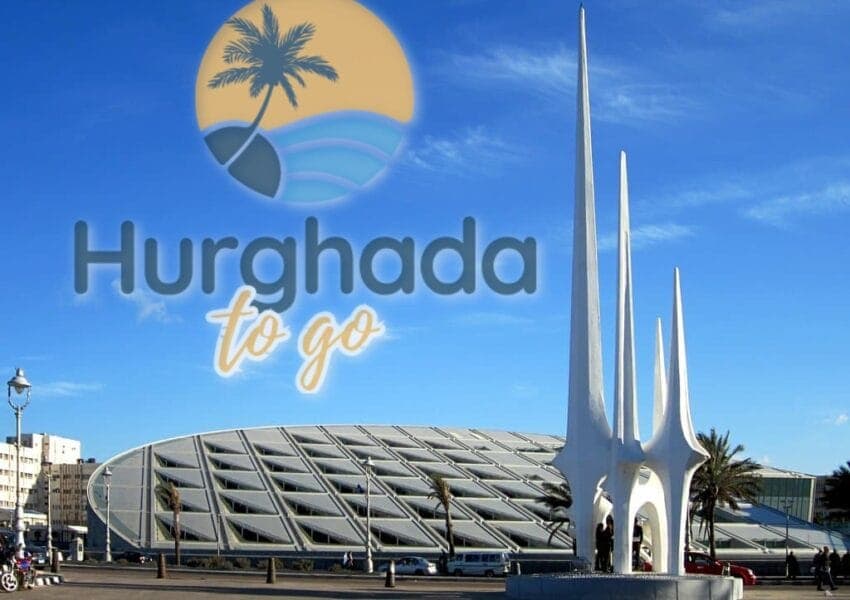
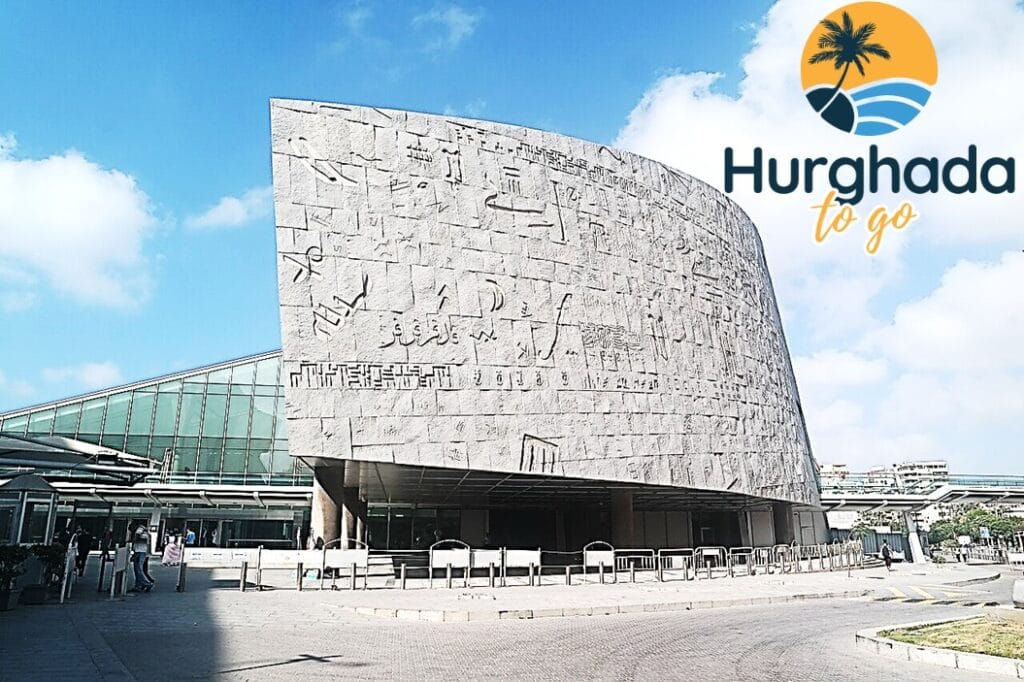
The Bibliotheca’s iconic design—a vast, tilted disc (160 meters diameter, 32 meters high at the front)—rises from the sea like a solar barge, its granite facade etched with letters from 120 global alphabets, honoring universal literacy. Clad in Aswan granite, it withstands earthquakes via base isolators. The slanted roof, perforated with 7,000 fiber-optic “stars,” floods the 11-story Main Reading Hall with natural light, accommodating 2,000 readers under a 17-meter ceiling. Eleven terraced levels cascade like papyrus scrolls, housing 8 million books.
Surrounding it: the Sphinx-lined plaza, planetarium, and cultural complexes evoke Ptolemaic grandeur. Sustainable features include solar panels and seawater cooling. Inaugurated October 16, 2002, by Mubarak, it faced backlash for cost amid poverty but won praise for its bold aesthetics—TIME called it “one of the modern wonders.”
04.Collections and Programs: A Digital and Scholarly Renaissance
Boasting 8 million books (including rare Arabic manuscripts), the library digitizes ancient papyri and hosts the Manuscripts Museum with treasures like a 9th-century Quran. Its Taha Hussein Café nods to Egypt’s literary giant. The Internet Archive partnership preserves web history, while the Bibalex Digital Library offers free access to millions of documents.
Programs span the Arab Observatory for Human Rights, Women’s Empowerment Center, and youth coding labs. Exhibitions on mummification, printing history, and AI ethics draw global crowds. As an International Center for Alexandria Studies, it fosters research on Mediterranean heritage, with labs in bioinformatics and nanotechnology.
05.Cultural Impact and Global Reach: Bridging Eras and Nations
The Bibliotheca hosts festivals like the Alexandria International Book Fair, drawing 2 million visitors yearly, and concerts under its dome. It champions open access, training librarians across Africa and the Arab world. Controversies include 2011 censorship claims during Arab Spring and debates over its “Western” design, yet it symbolizes post-colonial pride.
UNESCO-recognized, it collaborates with libraries worldwide, hosting the World Library Congress. During COVID-19, virtual exhibits sustained engagement. Critics note underfunding, but expansions like the Arts Palace and Research Park signal growth.
06.Legacy and Future: Illuminating Tomorrow’s Knowledge Horizon
Two decades on, the Bibliotheca Alexandrina transcends its ancient muse, embodying resilience against “book burnings” of ignorance. It inspires replicas in South Africa and Peru, proving libraries evolve. As AI and climate challenges loom, its cosmic disc reminds us: knowledge, like the sun, endures.
In Alexandria’s eternal breeze, the library whispers of rediscovery—inviting all to script the next chapter.
07.Suggested Visits in Alexandria: A Journey Through Time on the Mediterranean Shores
As the waves of the Mediterranean lap against Alexandria’s bustling corniche, the city’s timeless allure beckons—blending Hellenistic grandeur, Pharaonic echoes, and modern vibrancy into a tapestry of discovery. Whether you’re tracing the steps of Alexander the Great or seeking serene sunsets, Alexandria rewards the curious traveler with layers of history and hidden gems. Building on our deep dive into the Bibliotheca Alexandrina, this guide curates suggested visits: a mix of ancient wonders, cultural hubs, and leisurely escapes. From subterranean tombs to seaside fortresses, here’s your roadmap to the best spots, prioritized for first-timers. Pack your sunhat, grab a falafel from a street cart, and let’s wander the “Pearl of the Mediterranean.”
1. Bibliotheca Alexandrina: The Beating Heart of Knowledge
Start your Alexandria adventure where antiquity meets innovation—the modern revival of the ancient Library of Alexandria. This sun-disc icon, housing over 8 million volumes, museums on manuscripts, and planetarium, isn’t just a library; it’s a cultural cosmos. Wander the terraced reading halls bathed in light, explore exhibits on Egyptian heritage, or catch a film under the stars. It’s a must for history buffs, open daily with free entry to the plaza (museum fees apply). Pro tip: Visit at dusk for the facade’s glow against the sea.
2. Qaitbay Citadel: Echoes of the Lighthouse Legacy
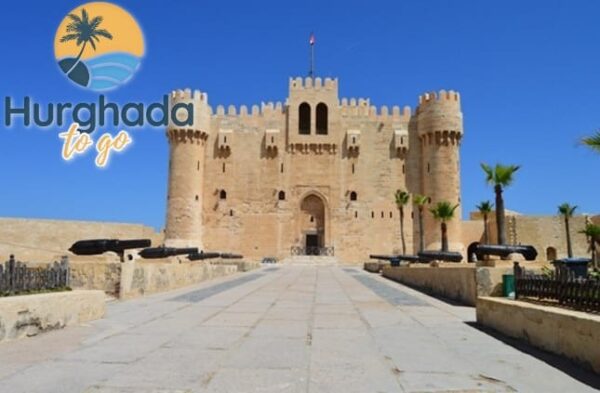
Perched on the site of the fabled Pharos Lighthouse—one of the Seven Wonders— this 15th-century fortress by Sultan Qaitbay guards the eastern harbor like a sentinel from the past. Climb its ramparts for panoramic Mediterranean views, delve into naval history exhibits, and imagine ancient beacons guiding ships. Built from lighthouse ruins, it’s a poignant nod to lost glories. Entry: ~180 EGP (~$6 USD), best in the morning to beat the crowds. Pair it with a harbor boat ride for sunken city glimpses.
3. Catacombs of Kom El Shoqafa: Underworld Marvels
Descend into mystery at these Greco-Roman-Egyptian hybrid tombs, a labyrinth of three levels carved from rock in the 2nd century CE. One of the Seven Wonders of the Middle Ages, it features serpentine stairs, ornate sarcophagi, and a fusion of pagan and Christian motifs—truly Alexandria’s cultural crossroads. It’s the final resting place for hundreds, blending mummification chambers with banquet halls. Tickets: ~140 EGP, wear sturdy shoes for the 100+ steps. A flashlight app helps illuminate the frescoes; avoid peak heat.
4. Pompey’s Pillar and Serapeum: Roman Splendor Amid Ruins
Towering 27 meters over the Serapeum temple ruins, this pink granite column (honoring Emperor Diocletian, not Pompey) marks a sacred library site from antiquity. Explore the subterranean crypts, sphinx-lined avenues, and scattered obelisks—remnants of a once-grand pagan center. It’s a quick, evocative hit of imperial history. Combo ticket with catacombs: ~90 EGP. Sunrise visits offer cooler temps and golden light on the stones.
5. Montaza Palace Gardens: Royal Serenity by the Sea
Escape the urban pulse in these 150-acre royal gardens, once the summer retreat of King Fuad. Stroll palm-shaded paths, admire neoclassical palaces, and picnic amid fountains and exotic flora—it’s a verdant oasis with harbor views. The Haramlek Palace (now a museum) showcases Khedival opulence. Free entry to grounds; museum ~60 EGP. Ideal for afternoons: rent a rowboat on the lagoon or savor seafood at beachside cafes.
6. Alexandria Corniche and Anfushi District: Coastal Vibes and Seafood Feasts
No visit skips the 40-km corniche—a lively waterfront promenade perfect for people-watching, street food (try koshari or grilled fish), and sunset jogs. Venture to Anfushi for authentic eats: fresh calamari at beach shacks while waves crash. It’s Alexandria’s soul—chaotic, colorful, and utterly Egyptian. Free to roam; evenings buzz with families and musicians.
7. Kom El-Dikka Roman Amphitheater: Echoes of Gladiator Days
Unearthed in the 1940s, this 2nd-century odeon seats 800, with marble tiers, mosaic floors, and adjacent baths—Europe’s only complete Roman theater in Egypt. Climb for harbor vistas and imagine ancient performances. Compact and underrated; ticket ~40 EGP. Combine with nearby Graeco-Roman Museum for artifacts like Pompeii frescoes.
8. Morsi Abu El-Abbas Mosque: Spiritual Splendor in the Old City
In the heart of Anfushi, this 18th-century mosque honors a revered Sufi saint with intricate Kufic calligraphy on its minarets and serene courtyard. It’s a pilgrimage site blending Ottoman and Andalusian styles—remove shoes and dress modestly for a peaceful interlude amid incense and prayer calls. Free entry; Fridays are vibrant but crowded.
08.Practical Tips for Your Alexandrian Odyssey
- Getting Around: Use Uber/Careem for ease; taxis are cheap but negotiate. A full-day tour (~$100/person) covers top sites efficiently.
- Best Time: October-April for mild weather; summers swelter.
- Stay: Boutique hotels along the corniche like Steigenberger Cecil for colonial charm.
- Day Trip from Cairo: Just 2-3 hours by train—perfect combo with pyramids.
Alexandria isn’t just sites; it’s stories etched in stone and sea. These visits weave a narrative from pharaohs to Ptolemies, inviting you to script your own.
09.Frequently Asked Questions
When did the modern Bibliotheca Alexandrina open?
The article states that the modern Bibliotheca Alexandrina opened in 2002, reviving the idea of Alexandria’s ancient center of learning.
How large is the modern library?
The article describes a vast tilted disc about 160 meters in diameter and says the reading complex is designed around multiple terraced levels.
How many books does the Bibliotheca Alexandrina hold?
The article presents the library as housing 8 million books, alongside manuscripts, museums, digital resources and research programs.
What else should I visit in Alexandria?
The suggested route includes Qaitbay Citadel, Kom El Shoqafa, Pompey’s Pillar, Montaza Palace Gardens, the Corniche, Kom El-Dikka and Morsi Abu El-Abbas Mosque.
What is the best season for Alexandria?
The practical tips recommend October to April for milder weather and note that Alexandria can be very hot in summer.
Ready to Plan Your Egypt Trip?
Browse current Hurghada To Go experiences or contact the team if you need help choosing the right itinerary for your trip.

Egypt, made easier to discover.
Hurghada To Go brings together carefully selected experiences, useful local knowledge and practical travel planning across Egypt — from the Red Sea to Luxor, Aswan, Cairo and the Nile.